
Insight
Artificial intelligence – a 2,000-year-old dream coming true
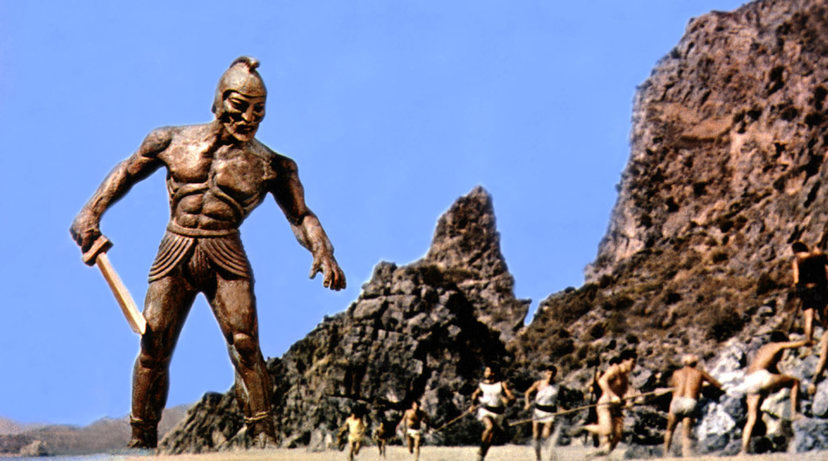
Artificial intelligence (AI) has gained a lot of attention in recent years, but actually, it has been around for a long time. The idea of man-made intelligence can be traced back all the way to ancient Greece, to the myth of Talos, a giant bronze statue that protected the island of Crete from invaders. Fast forward to today, AI is applied in all kinds of ways from helping us detect contamination in groundwater to accelerating personal efficiency.
So, what is AI? It is a system or algorithm that allows computers to perform tasks without explicitly being programmed to do so1. In other words, it is a machine’s ability to keep learning and improving its performance without human .intervention2
Let us dive into the not-so-short history of artificially intelligent machines and how we utilise them in COWI.
60 AD:
Dreaming about man-made intelligence
We have met many examples of man-made intelligent creatures in art and science fiction throughout history, from Talos of Crete to Mary Shelley’s Frankenstein and the brainless tin man from the Wizard of Oz. Fiction, however, inspired real innovation. In 60 AD, Heron of Alexandria created multiple automatons, including the world’s first vending machine.
1950:
First steps
In 1950, Alan Turing – one of the most influential theorists of the early computer age – published a seminal paper titled ‘Computing Machinery and Intelligence’. In this paper, Turing approached the question of whether machines can think from a new perspective and presented the imitation game to assess a machine’s ‘intelligence’: If a computer could convincingly imitate human thinking through text, it passed the test.

1956:
Artificial intelligence was born
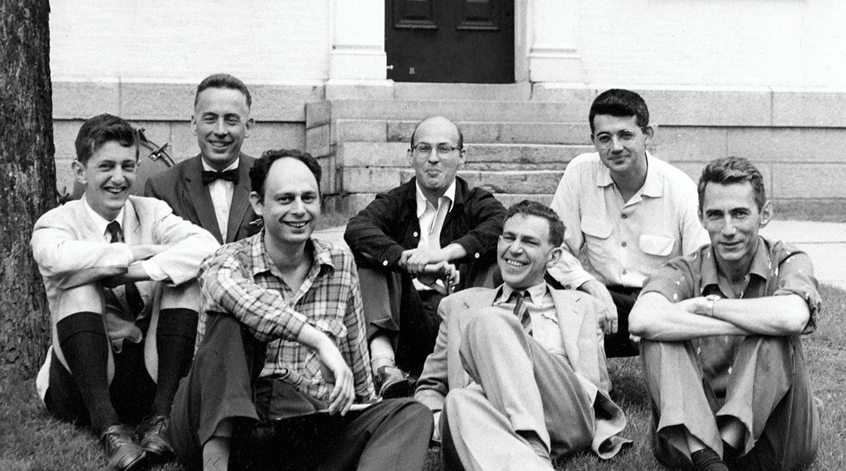
The term ‘artificial intelligence’ was coined in 1956 when John McCarthy, an assistant professor in mathematics at Dartmouth College, located in Hanover, New Hampshire, gathered some of the most renowned thinkers in the field for a summer workshop titled ‘Dartmouth Summer Research Project on Artificial Intelligence’.
This event kickstarted AI research, and the cornerstones of the technology, such as the concepts of machine learning and neural networks, were formed in the next decade. The AIs of this era were knowledge-based, meaning that they followed a set of pre-programmed rules to imitate human intelligence. One example is the Logic Theorist, a computer program capable of proving 38 theorems of the Principia Mathematica, a three-volume work on the foundations of mathematics.
1960-1980s:
The AI winter
The hype and unrealistic expectations shaped by the early successes of the 1950s led to disappointment with the unimpressive achievements in the late 1960s. General interest and funding plummeted both in academic research and commercial applications.
The arrival of expert systems, such as Japan’s government-funded project ‘Fifth Generation Computer Systems’, in the late 1980s heralded the end of the AI winter, even though they still relied on rule-based reasoning. Despite their brief but intense popularity, they ultimately proved unable to meet their ambitious goals.
1990s:
Resurgence of machine learning
In the late 1980s and 1990s, scientists approached machine learning from a more human perspective. Instead of rule-based deduction, they enabled machines to learn from available data and trial-and-error experiences. Two backbone concepts of today’s AI came to life: deep learning and neural networks. This led to major advances in computer vision, speech recognition and natural language processing, along with a renewed interest in the commercialisation of AI.
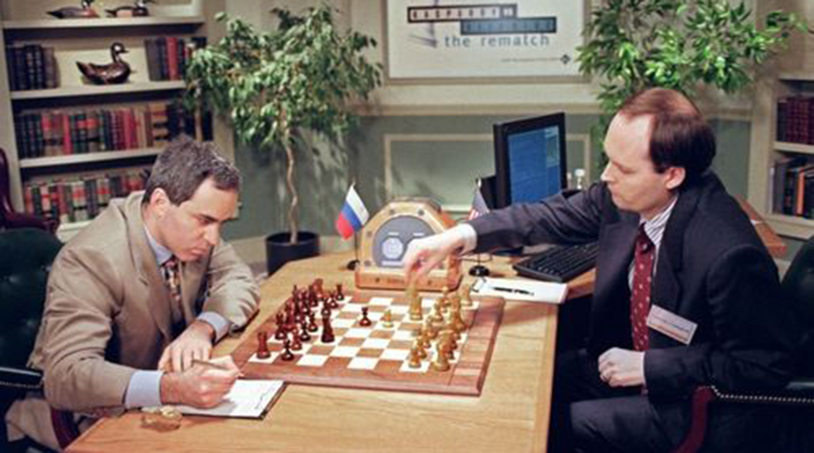
In 1996, IBM’s Deep Blue program defeated the world chess champion Garry Kasparov. Even without utilising deep learning, Deep Blue represented a major milestone in the advancement of AI.
Early 2000s:
The era of big data and deep learning
Deep learning started to soar with the increase in computing power and the large amount of data made available by the internet and smartphones.
2011 –
IBM’s question-answering system, Watson, won the quiz show Jeopardy!, and Apple released its digital assistant, Siri.

2015 – Data became art
Refik Anadol, a Turkish-American new media artist and designer, started creating AI sculptures and paintings of abstract, dream-like environments using data-driven machine learning algorithms.
2016 –
DeepMind’s AlphaGo defeated Lee Sedol, the world champion in one of the most complex games known to man: Go.
2018 –
Google-owned Waymo commercialised autonomous taxis in the US.
Sense, Solve, and Go: The Magic of the Waymo Driver - YouTube
2021 –
OpenAI introduced DALL-E, a deep-learning model capable of generating digital images from natural language descriptions.
2021 –
The European Commission proposed a regulatory framework on artificial intelligence (AI Act) to ensure that AI systems used in the EU are safe, transparent, traceable, non-discriminatory and environmentally friendly. The law was finalised in 2023 and it is the world’s first comprehensive AI law.
Deepfake technology, previously known for its unethical use, entered commercialisation as Bruce Willis’ AI-generated counterpart starred in the first-ever deepfake advertising for a Russian telecommunications company.
Deepfake Bruce Willis appears in Russian advert
2022 –
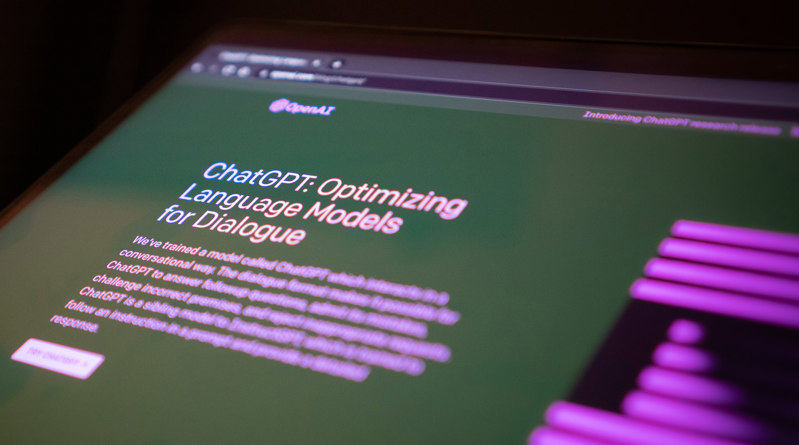
OpenAI launched ChatGPT, a publicly available large language model-based chatbot that generates human-like responses and engages in coherent conversation.
The launch sparked public debate on whether the chatbot passed the Turing test. In some way, it does, as the answers are often indistinguishable from a human being. However, using ChatGPT’s own words: “My capabilities are based on the text data I’ve been trained on and the algorithms that power me, so I may have limitations in certain areas and can’t consistently pass the Turing test in every situation.”
2020s:
What is next?
Amidst scepticism over how well AI can perform a task and concerns about job security, the technology continues to develop rapidly. We are indeed living in a golden age of artificial intelligence, but are we heading towards another AI winter due to hype and unrealistic expectations? Maybe. But for now, AI cannot beat human intelligence. It can, however, offer great assistance in many fields. With continuous supervision and sufficient regulation, AI can be an extremely helpful tool as long as we keep our hands on the steering wheel – autonomous driving or not.
AI in engineering
The technology does not leave any industries untouched, and engineering is no exception. AI can enhance productivity as well as offer new solutions to engineering challenges. COWI utilises AI in a number of service offerings, one of them being a PFAS Risk Screening Tool that uses machine learning to assess contamination vulnerability of groundwater from PFAS chemicals.
"AI will not replace engineers, but engineers who utilize AI will potentially replace the ones who don't. This is why we need to think strategically about AI in a company like COWI. That way, we can keep offering the best solutions to our customers, instead of running the risk of being replaced in the marketplace."
Kenneth C. Kleissl, Group Technology Director
Keeping innovation and digitalisation in focus, COWI facilitates continuous knowledge sharing and introduced an in-house GPT tool, the AI Playground that supports personal efficiency.
"In COWI, co-creation is central to everything we do. This is also at the heart of our tech communities, including the AI Community. Here, more than 1,400 members ranging from engineers to AI specialists meet to share information, identify innovative solutions, and create proof of concepts that can scale."
Christian N. F. Sørensen, Data Scientist & AI Community Lead
We continue to explore the potential of artificial intelligence as the technology shapes the future of engineering.
References:
Bashir, D. (2022). AI Literacy: Understanding Shifts in our Digital Ecosystem. New Degree Press. ProQuest Ebook Central.
Cisek, G. (2021). 'Do You Know How It Was?': The History of AI. In: The Triumph of Artificial Intelligence. Springer, Wiesbaden.
Coffee, P. (2022). ‘Deepfakes’ of Celebrities Have Begun Appearing in Ads, With or Without Their Permission. The Wall Street Journal.
Dia, M. (no date). A Brief History of AI. That’s AI.
Fanti, L., Guarascio, D. & Moggi, M. From Heron of Alexandria to Amazon’s Alexa: a stylized history of AI and its impact on business models, organization and work. J. Ind. Bus. Econ. 49, 409–440 (2022).
Harvard Business Review, Davenport, T. H., Brynjolfsson, E., McAfee, A. & Wilson, H. J. (2019). Artificial Intelligence: The Insights You Need From Harvard Business Review. Boston, Massachusetts: Harvard Business Review Press. ISBN 9781633697898.
Russell, S. The history and future of AI. Oxford Review of Economic Policy, Volume 37, Issue 3, Autumn 2021, 509–520
Smith, P. D. (2018). Hands-On Artificial Intelligence for Beginners: An introduction to AI concepts, algorithms, and their implementation. Packt Publishing Limited. ProQuest Ebook Central.
World Intellectual Property Organization (2019). WIPO Technology Trends 2019 – Artificial Intelligence.
Related Insights
All Insigths
Headquarters
COWI A/S
Parallelvej 2
2800 Kongens Lyngby
Denmark
Shortcuts
Sustainability and governance
Terms of use