
Prioritising cost, security and growth in global energy
The global energy landscape is shifting from focusing on emission reductions to prioritising cost, security and economic growth. Europe and the Asia-Pacific region are leading this change with emphasis on affordable, low-cost energy technologies like offshore wind and solar PV.
Until recently, the energy markets were driven by carbon emission reductions. Largely influenced by the geopolitical situation and global competition, the main drivers within the energy markets have now rapidly shifted towards energy costs, energy independence and security, economic growth and competitiveness, as well as emission reductions in the mentioned order.
This is particularly true for Europe and the Asia-Pacific (APAC) region. In the APAC region, the development is driven by a strong demand for low-cost energy to support the high-growth emerging economies. In the US, the energy agenda has changed since the Biden administration, with a refocus on fossil fuel energy and the green transition facing pressure.
Looking at Europe, the new Affordable Energy Act in the EU means that the lowest cost of energy technologies will be focused and deployed, particularly through direct electrification, with major growth expected in offshore wind, solar photovoltaic (PV) and battery storage to stabilise the grid.
Jan Behrendt Ibsø, Group Senior Market Director, Renewable Energy.
According to a recent analysis by Think Tank Europe and Copenhagen Infrastructure Partners (CIP), the main focus in Europe will be low-cost energy through solar PV, onshore wind and offshore wind. Increased electrification of industries is expected to improve energy efficiency and reduce overall energy demand despite the growing consumption from data centres and AI.
Significant growth in offshore wind and solar PV requires new developments
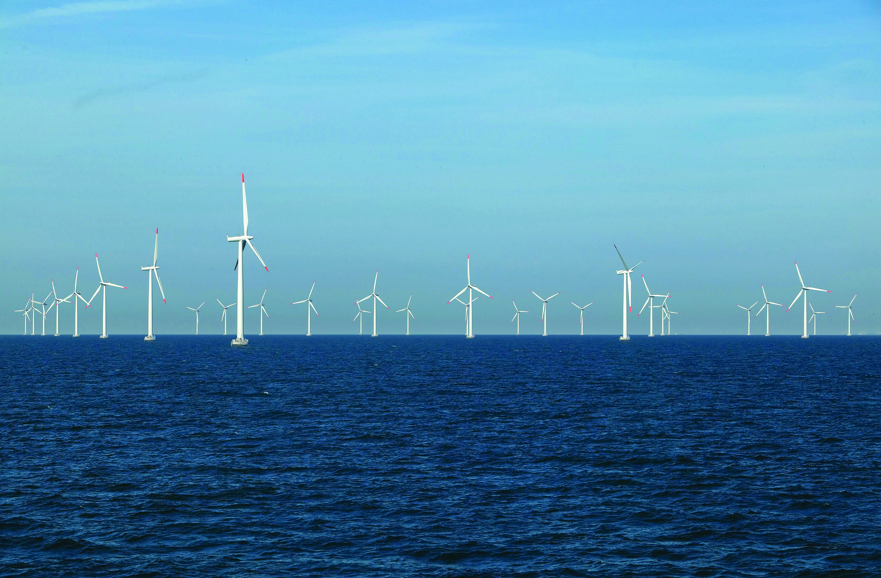
Think Tank Europe and CIP forecast a major increase in offshore wind capacity, expecting it to grow to about seven times its current accumulated installed capacity. Solar PV is also expected to expand significantly, but its development may face some challenges because it requires vast tracts of land, and local opposition, known as the Not In My Back Yard (NIMBY) effect, may influence securing permits for the build-out.
At the same time, there will be substantial growth in battery storage to help store solar and wind energy and to stabilise the grid when renewable sources are low or unavailable. Despite these advances, natural gas will still be needed to meet peak demand, making it unlikely to reach full net-zero emissions by 2050. More costly green fuels and nuclear energy will play smaller roles due to their higher costs and longer development times. Key to this transition will be investments in power and hydrogen transmission networks, regulatory reforms, better risk-sharing and building resilient supply chains (source: Powering the Future – A Vision for Europe’s Energy System in 2050).
Expensive energy solutions and technologies, like ammonia and e-methanol, are likely to become less important over time. As technology advances and costs go down, cheaper and more efficient options will be preferred. This shift means high-cost energy may lose its appeal. This could mean that sectors with very high CO2 abatement costs, such as aviation and peaker plants (power plants that are specifically designed to meet peak demand) will continue to rely on fossil fuels. On the other hand, clean hydrogen technology is still expected to play a significant role in the green transition towards 2050, and with significant build-out of hydrogen infrastructure in Europe.
Building a secure, affordable and resilient energy system for tomorrow
The offshore wind market is shifting from the US to APAC and Europe, with the new drivers in global energy. To build a more secure and resilient energy system, we will have to pay attention to the following areas:
- Transmission and power systems – both for offshore wind and general transmission projects.
- Battery technology and storage – battery storage will be crucial, combined with wind and Solar PV, also for stabilising the grid in periods with low wind and solar energy availability.
- Electrification – microgrids for data centres are a new market to focus on.
"Microgrid technology could be key to a more efficient and reliable energy system by 2030 as it harnesses solar and wind power along with battery storage. Designed for geographical areas with limited access to renewable energy sources or challenging connections to the national grid, microgrids offer a safe and resilient energy solution," explains Jan Behrendt Ibsø.
Related Insights
-
 Turning up the heat: new potential for district heating across Europe
Renewable energy
Turning up the heat: new potential for district heating across Europe
Renewable energy
-
 Microgrids: Local power grids offer the vitamins future energy needs
Renewable energy
Microgrids: Local power grids offer the vitamins future energy needs
Renewable energy
-
 Making CO₂ a viable business
Renewable energy
Making CO₂ a viable business
Renewable energy
Headquarters
COWI A/S
Parallelvej 2
2800 Kongens Lyngby
Denmark
Shortcuts
Sustainability and governance
Terms of use