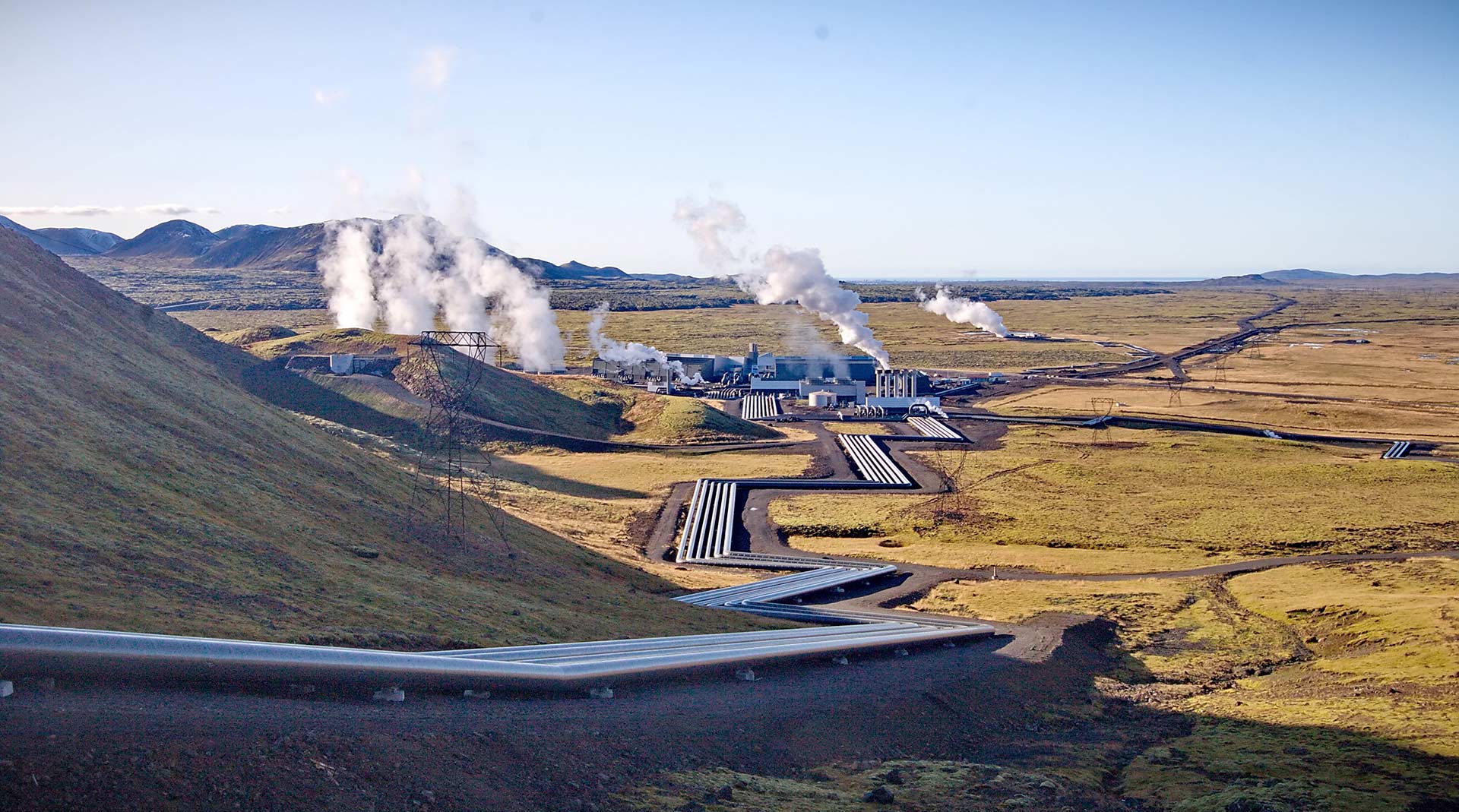
Hellisheidi Geothermal Energy Plant, Iceland
Renewable energy: heat, power and circular economy in one

About
Challenge
Reykjavik and the greater capital area needed to increase the heating capacity to accommodate the growing city and meet an increase in electricity demand.
Solution
ON Power decided to harness a large geothermal energy resource just outside Reykjavik and build a modern geothermal flash steam combined heat and power plant (CHP). The Hellisheidi Geothermal Power Plant was built in phases, the first one commissioned in 2006 and the last in 2018. It is the largest geothermal CHP plant in Iceland and the fourth-largest geothermal power plant in the world.
Value
The plant is designed to have an installed heat capacity of 400 MWth and will meet the demand for space heating in the Reykjavik capital area for years to come in a sustainable manner.
Specifications
Plant capacity
A 303 MW electrical and 200 MW heating capacity
Power plant
Fourth-largest geothermal power plant in the world. 66 production wells and injection wells at depths ranging from 1,000 metres to more than 3,000 metres.
Location
Reykjavik
Period
2002–ongoing
Country
Iceland
Partners
ON power (owner), Verkís, Tark Architects and Landslag Architects
Services
Project management; environmental impact assessment; overall and detailed plant design; design management; process, mechanical and system design; well design; preparation of bid documents and bid evaluation; site supervision; inspection of rigs, equipment & materials; supervision of drilling operations, steam collection system, civil works, mechanical work, turbine and cold end installation, control system & electrical work; commissioning work and start-up; acceptance testing; and training of operators.
This water is up for a ride
At the Hellisheidi Geothermal Power Plant, the heating process happens through a complex process. First, the two-phase geothermal fluid from the production wells is piped to a central separation station where steam is separated from the water at a pressure of about 10 bar. The steam is piped to power stations where electricity is generated in condensing steam turbines, six high-pressure turbines and one low-pressure turbine. The condensers from the four turbines are then used to preheat fresh water. The separated water is flashed at lower pressure, and the steam generated is used in the low-pressure turbine, whereas the water is used in heat exchangers to heat the water – preheated in the condensers – to the required temperature for the district heating system in Reykjavik.
Click here if you want the full story about the Hellisheidi Geothermal Power Plant.

Headquarters
COWI A/S
Parallelvej 2
2800 Kongens Lyngby
Denmark
Shortcuts
Sustainability and governance
Terms of use