The Copenhagen Metro, Denmark
From capital to metropolis – take the metro

About
Challenge
Every day, people spend billions of hours waiting in traffic jams around the world. A problem that will accelerate as urbanisation increases; around 70% of the world’s population is expected to live in cities by 2050.
Solution
Urban transportation that is frequent, reliable, sustainable and well-integrated with the city’s other infrastructure solutions. It has to be close to people’s homes and work places and easy to use in combination with other sustainable means of transportation.
Value
A well-functioning infrastructure with reliable public transit is key to developing a city where people can live, work and thrive in all life’s stages. When you succeed, the city has what it takes to become a centre for business, education, culture and quality of life.
Specifications
Facility
Driverless metro
Location
Copenhagen
Period
1994–ongoing
Country
Denmark
Partners
The Copenhagen Metro, Arkitema, Arup, Gehl Architects, IS IT A BIRD and others
Services
Owner’s engineer; concept and reference design; procurement tender documents; EIA; civil works; utilities; areas and rights.
First, best, nicest looking and greenest
First and best, really? Yes, really. The Copenhagen Metro was one of the world’s first driverless metros. It is considered by many to be the most well-designed; aesthetically well-thought-out with its minimalistic Scandinavian design, elegant integration of stations into the city surroundings and its excellent passenger experience.
The metro in Copenhagen consists of four lines, with a fifth, M5, in the planning phase and expected to open in 2035. COWI has been a part of the project since 1994 when the early design phase for the first two lines began. The M1 and M2 were completed and opened in 2002.
The Danish authorities decided to build a metro in the capital after several discussions. The existing infrastructure was under pressure, forecasts were anticipating continuing city growth, and there was a wish to kick-start the development of a new urban area, the Ørestad district.
Great infrastructure is essential in a capital city
Every day, people spend billions of hours in traffic jams around the world. By 2050, it is expected that 70% of the world’s population will live in a city, which means that the congestion will only get worse. A lot worse.
From the 1950s and until around 1990, central Copenhagen’s population saw a decrease but has been increasing ever since. This development is expected to continue, with a growth of 12–13% in the coming 20 to 25 years. By 2050, the greater Copenhagen area is expected to be home to 750,000 inhabitants.
“The M1 and M2 stations set new standards for public transit systems, not just in Copenhagen but worldwide. With the M3 line, Cityringen, we continued the past design but focused on stations belonging to local areas and being part of the city.
Ensuring daylight on the platforms below ground through skylights above ground creates visual connections between the city and the station, supporting the principle of the underground spaces being a continuation of the urban realm.
On the newest line, M4 to Sydhavnen, we have integrated artwork by Danish artists at the stations in cooperation with the Danish Arts Foundation (Statens Kunstfond), and the five new stations have their own distinctive character. The artwork adds an extra dimension to the passenger experience.”
Thomas Grave-Larsen, Partner, Arkitema
The metro made Copenhagen a metropolis
The vision for the metro was not only about transportation and infrastructure. It was a bigger vision to create a strong capital city that was an attractive place to live and work during all phases of life. And to ensure the city would be able to attract businesses, create jobs and support a strong science and research environment linked to educational institutions of international recognition. In other words: to make Copenhagen a real metropolis of international scale.
This was followed by an equally ambitious vision for transportation and infrastructure development. At the time, the city of Copenhagen had a network of well-functioning city trains, the red S-trains, an extensive network of buses as well as dedicated cycle lanes on most main streets. But the expansion of the city into new areas and the increased pressure on traffic called for new solutions.
How to find space in a crowded city
The transportation and infrastructure objectives were to create a completely new means of transportation in Copenhagen. Something above and beyond what you normally see. The idea of the ultimate, flexible, modern urban underground system was born. A high-frequency, reliable and safe metro service operating 24 hours a day, seven days a week.
The streets of central Copenhagen are crowded and narrow, and below them the space is crammed with telephone lines, power cables, water pipes, gas mains, sewage pipes and other utilities. When you add the city’s many old buildings and historical landmarks, constructing a metro becomes a challenging task. Challenging and fun if you are an engineer.
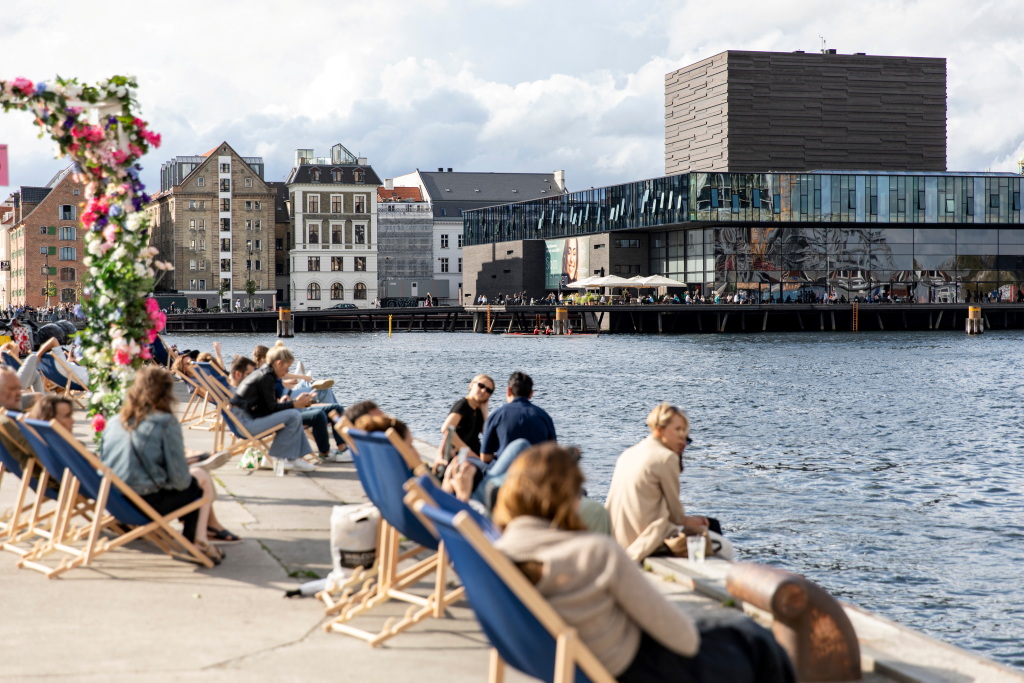
M5 – the greenest metro ever made
A lot of people were sceptical when the first metro opened in 2002. Did Copenhagen really need this? With more than two million passengers every week, we can safely say that the metro has proved its worth.
The Copenhagen Metro is owned by the City of Copenhagen, the City of Frederiksberg and the Danish State, and over time it has become the most used means of transportation in the capital. Naturally, ambitions have been raised, and the metro now aims to be the most wanted sustainable mobility offering in Copenhagen.
Sustainability has always been part of the metro agenda, but with more than 20 years of proven ability to deliver a reliable and comfortable high-class transportation service, the topic is now above everything else in the business strategy. For the M5, which is expected to open in 2036, the ambition is to make the greenest metro in the world by reducing its carbon footprint during construction by 50% compared to the previous lines.
This is a very ambitious goal, and at Arkitema and COWI, we are working with innovative solutions to assist the Copenhagen Metro in achieving it.

A 30-year-old relationship and counting
COWI has worked with Copenhagen Metro since its establishment in 1993 on the four existing lines – Arkitema joined in 2015 on the M4 line to Sydhavnen – and we continue our close collaboration on the next line, M5.
When in operation, the M5 will connect new city development areas east of Copenhagen, including Lynetteholm, Refshaleøen and Kløverparken, with the existing city and transportation network. It will help relieve congestion on the M1 and M2 lines, ensure an even more robust metro network in Copenhagen, and contribute to creating an energy-efficient and sustainable metro system that has low lifecycle costs and integrates seamlessly with other modes of urban transportation, such as trains, buses and bicycles.
COWI and Arkitema's engagement on M5 is in a joint venture with Arup, another long-time partner on the metro. As the owner’s engineer, we are responsible for both civil works design and areas and rights.

The areas and rights works include:
• planning of expropriations
• cadastral mapping
• preparation of easements.
The civil works include:
• owner’s engineer services
• concept and reference design
• procurement tender documents
• construction schedule and costing
• architectural design
• planning of urban areas around stations
• environmental impact assessment
• utility register and utility relocations.
Related projects
-

Juneau Creek Bridge, Alaska, USA
Launching seven million pounds of steel across an Alaskan canyon
-

Syphon Reservoir Improvement Project, USA
Strengthening water security for 600,000 people in Southern California
-

The Fehmarnbelt Fixed Link, Denmark and Germany
Connecting Scandinavia and continental Europe through the world’s longest immersed tunnel
Headquarters
COWI A/S
Parallelvej 2
2800 Kongens Lyngby
Denmark
Shortcuts
Sustainability and governance
Terms of use