Jeonnam 1 Offshore Wind Farm, South Korea
From sea breezes to clean energy

About
Challenge
Complex seabed conditions threatened both the technical feasibility and commercial viability of harvesting wind energy off South Korea's coast. With the seabed constantly shifting due to erosion and sedimentation, designing reliable and cost-effective foundation protection became a critical challenge.
Solution
Making it possible to build where others saw limitations, scour protection was developed to address the challenges posed by a highly mobile seabed. Combined with steel monopile foundations, the resulting design provides the resilience and adaptability needed to ensure long-term foundation stability and project viability.
Value
This project significantly contributes to South Korea’s ambitious sustainability goals of converting 20% of the country’s electricity generation to renewable sources by 2030. It also plays a vital role in boosting the local economy, supporting fisheries and providing employment opportunities.
Specifications
Capacity
99 MW
Facts
More than 100,000 households receive 99 MW of green electricity from the Jeonnam 1 Offshore Wind Farm.
Location
40 km west of the coastline of Yeonggwang-gun, Jeollanam-do
Period
2021–2025
Country
South Korea
Partners
Jeonnam Offshore Wind Power and others
Services
Detailed foundation design, following the front-end engineering design of the wind turbine generators’ foundations.

Creating a tailwind for offshore wind in South Korea
South Korea is taking ambitious measures to make its energy supply more sustainable. An important step is the Jeonnam 1 Offshore Wind Farm, which is situated off the coast of Shinan County in Jeonnam Province in the southwestern part of South Korea.
Jeonnam 1 represents the country’s first commercial offshore wind energy project and comprises ten wind turbine generators (WTGs), which generate 99 MW of energy.
The water depth at the site ranges from 5 to 20 metres, with monopile foundations featuring monopiles with diameters of up to eight metres. The wind farm commenced operation in 2025 and is expected to provide green electricity to more than 100,000 households in South Korea.

Joining forces offshore
Jeonnam 1 is a joint venture between SK E&S, a leading South Korean energy conglomerate, and Copenhagen Infrastructure Partners (CIP), a global investor in renewable energy infrastructure.
The project combined strong local insight and international offshore wind expertise, which was instrumental in navigating its complexities and ensuring successful delivery.
Designing for a dynamic seabed
One of the most severe technical challenges of the project was the question of seabed mobility, which means that the entire seabed is exposed to either erosion or sedimentation over time.
Consequently, scour protection measures around the monopile foundations are essential, but the conditions at the site made it difficult to create a uniform design for scour protection. To address this, we partnered with Deltares, a leading Dutch knowledge institute for water and subsurface, and we used a series of physical model tests to determine the best scour protection solution for the project.
Innovative installation solutions
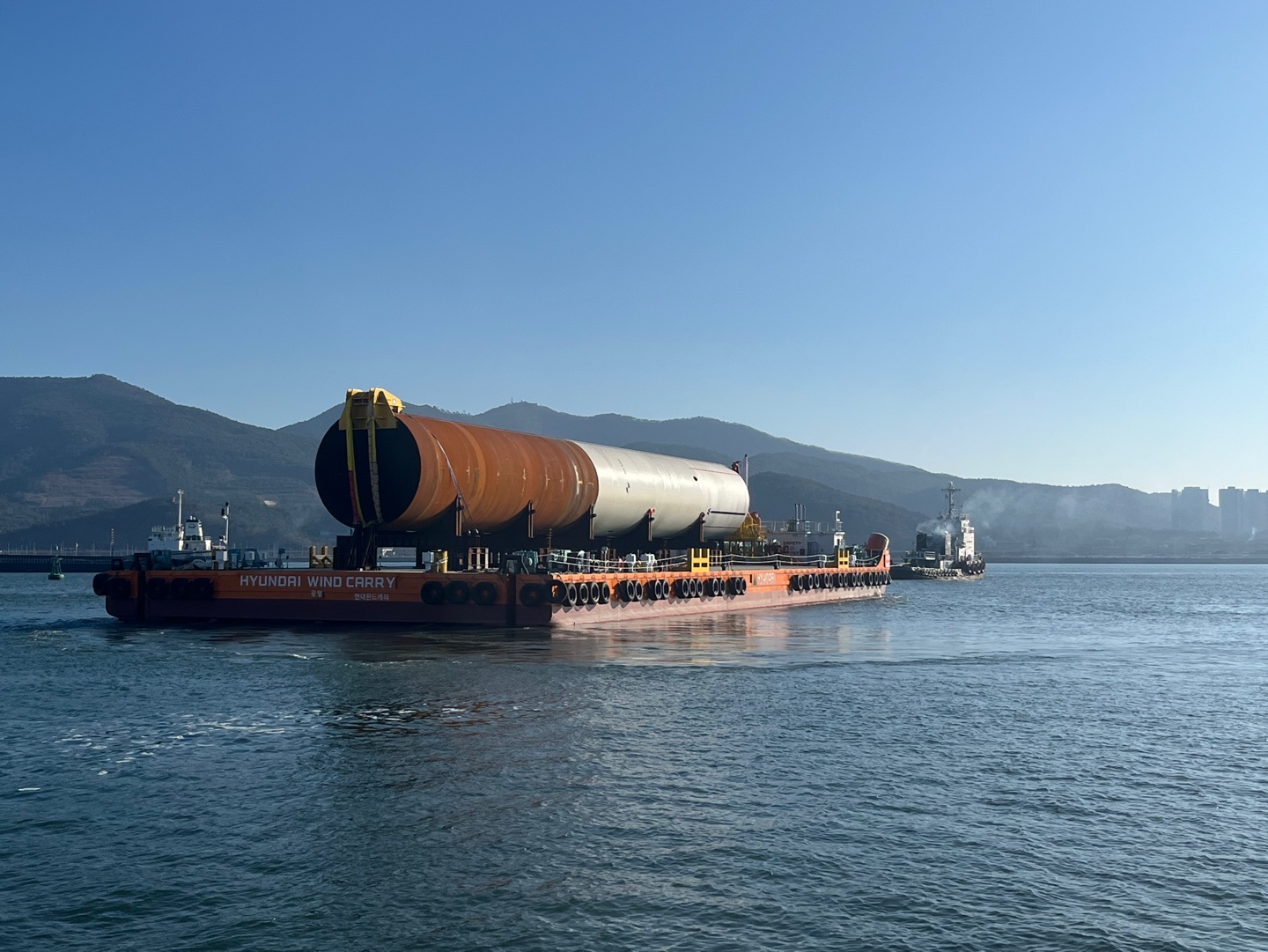
The design also incorporates innovative installation solutions. The embedded part of the foundation can be composed of a monopile (MP) that is driven to the target depth using an impact hammer, or it can be composed of several structural components (monopile (MP), insert pile (IP) and grout annulus) to form a rock socket.
Following pre-design studies, steel monopiles were used, ensuring the foundation’s adaptability and resilience to the site’s conditions.
With the project achieving certification in 2022, the Jeonnam 1 Offshore Wind Farm is not only a significant benchmark for South Korea but also serves as a reference for future offshore wind projects by SK E&S and CIP/COP, both in South Korea and internationally.

From first project to future potential
The Jeonnam 1 project is indeed an engineering accomplishment.
Being South Korea’s first offshore wind farm, the project has already paved the way for future developments in the renewable energy sector, sparking a growing industry.
Related projects
-

HØST PtX, Esbjerg, Denmark
Power-to-X – not as mysterious as it sounds
-

Hellisheidi Geothermal Energy Plant, Iceland
Renewable energy: heat, power, and circular economy in one
-

Empire Wind, New York, USA
New power for New York
Headquarters
COWI A/S
Parallelvej 2
2800 Kongens Lyngby
Denmark
Shortcuts
Sustainability and governance
Terms of use