HØST PtX, Esbjerg, Denmark
Power-to-X – not as mysterious as it sounds

About
Challenge
Industries like agriculture and shipping traditionally rely on fossil resources because of their need for fertilizer and fuel. To succeed with the green transition, we need large-scale production of green alternatives for fertilizers and fuel. And we cannot afford to fail.
Solution
Producing green alternatives is a fairly simple, yet quite complicated task. Ammonia can be used both for green fuel and fertilizer, and all you need to make it is water, electrolysis and energy. Power-to-X is the somewhat mysterious name given to plants like HØST in western Denmark that use clean renewable energy sources like offshore wind and solar to perform electrolysis and produce ammonia.
Value
Shifting from fossil fuels and fertilizers is an essential part of the green transition, and electricity from wind and other renewable sources is the key to succeeding. With large-scale plants like HØST, we can transform wind power into energy sources that can be stored and used to create more sustainable means of transportation, shipping and agriculture.
Specifications
Facility
Power-to-X plant
Location
A 30-hectare area in Esbjerg Municipality
Period
2021–ongoing
Country
Denmark
Partners
Copenhagen Infrastructure Partners (CIP), Arla, Danish Crown, DLG, A.P. Møller Mærsk and DFDS
Services
Planning and permitting; owner’s engineer.
The key to green fuel is a 100-year-old process
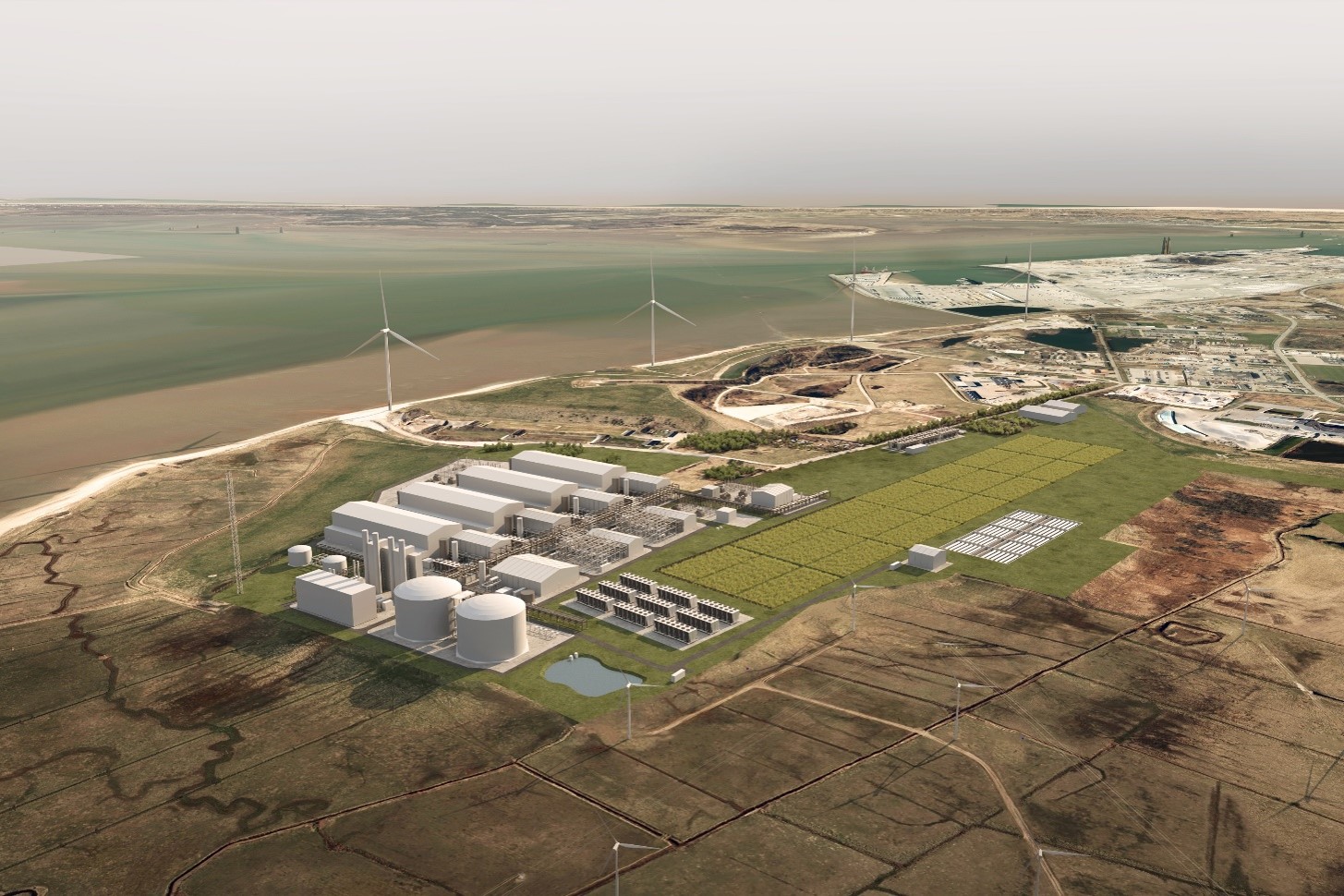
In the eastern end of Esbjerg, the seaport city on the west coast of Jutland, one of Europe’s largest hydrogen and ammonia plants is being developed. The plant, developed by Copenhagen Infrastructure Partners (CIP), bears the name HØST PtX Esbjerg and will produce green hydrogen and ammonia using only renewable energy in a process widely known under the term Power-to-X.
Power-to-X (PtX) is a technology that represents a new chapter in the large-scale decarbonisation of our infrastructure and agriculture. The production of hydrogen happens through electrolysis, which splits water into hydrogen and oxygen. This process has been known for more than a century. The challenge is that you need a lot of electricity to perform electrolysis. When the electricity originates from renewable sources like wind and solar, the hydrogen you produce is green and clean. HØST PtX Esbjerg will solely use power from renewable sources like solar PV and offshore wind turbines in the North Sea in its production.
We have plenty of renewable energy to help the green transition
Hydrogen can be used to make fuel for vehicles, ships and even aircraft, thereby helping the much-needed decarbonisation of our transportation sector. By adding nitrogen, the hydrogen becomes fertilizer in the form of ammonia that can be used to produce green fertilizer or shipping fuel, thereby creating more sustainable agriculture and transportation.
Wind energy and solar energy are in many ways endless resources. However, both are also forces of nature that cannot be controlled. We cannot plan when the sun shines or the wind blows, and it is difficult and ineffective to store the energy and electricity that are produced in the current battery types. With PtX, we are not storing the electricity itself but using it to produce other types of energy that can be stored more easily and effectively.

Reduced emissions, green hydrogen, ammonia and more
The finished HØST PtX plant will have a capacity of 1 GW, making it one of Europe’s largest PtX facilities that will contribute to an annual reduction of 1.5 million tonnes of emissions.
The benefits of the plant do not end with the plentiful supply of green hydrogen and ammonia or the substantial CO₂ reductions. The excess heat from the production will be used in district heating, securing warm feet in 15,000 households in Esbjerg and Varde municipalities. The region’s job market will also benefit as the plant will generate about 150 permanent and green jobs.
It is a joint effort (of course)
HØST PtX Esbjerg is developed by Copenhagen Infrastructure Partners (CIP), but as with all pioneering projects, partnerships are of outmost importance. CIP has partnered with the Danish market leaders in agriculture, Arla, Danish Crown and DLG as well as the Danish international container shipping company A.P. Møller-Mærsk and DFDS. With these strong partners on board, CIP is making sure there are takers for the ammonia the plant will eventually produce.
COWI's involvement in HØST PtX Esbjerg entails assisting CIP with several parts of the project, ranging from spatial planning, risk analysis, safety and environmental assessments, to planning and early project maturation. It is a pioneering project where all partners are investing in different ways to create a success that others can look to for inspiration and new solutions.
"Power-to-X, or in this case Power-to-Ammonia, will be key in decarbonising industries that traditionally have been reliant on fossil fuels. The transition to green alternatives will be driven by a genuine need for fast developing technologies and significant cost reductions in clean renewable energy. At COWI, we want to contribute to this development by investing heavily in our competencies within PtX, carbon capture and renewable energy. HØST is a fantastic project to be part of, and we believe that together we can make a real difference on the sustainability agenda."
Kasper Fröhlich, Business Development Director in COWI's Energy division
A good start is half the battle won
COWI’s work on HØST PtX Esbjerg began in 2021 with due diligence, initial surveys, regulatory processes and project clarification. In September 2023, the municipality and the Ministry of Environment of Denmark approved the local plan and the strategic environmental assessment (SEA) for the area.
The project is now moving into the next phase – a public hearing by the Ministry of Environment of Denmark and the Danish Environmental Protection Agency concerning the environmental impact assessment (EIA) and the environmental permit and safety approval (Seveso). The final approval is expected during the summer of 2024, after which the project will continue with site preparation and detailed design.
Hero image: The energy for Power-to-X comes from renewable sources like wind and solar. In the picture is Array Wind Farm near London.
Related projects
-

Jeonnam 1 Offshore Wind Farm, South Korea
From sea breezes to clean energy
-

Hellisheidi Geothermal Energy Plant, Iceland
Renewable energy: heat, power, and circular economy in one
-

Empire Wind, New York, USA
New power for New York
Headquarters
COWI A/S
Parallelvej 2
2800 Kongens Lyngby
Denmark
Shortcuts
Sustainability and governance
Terms of use